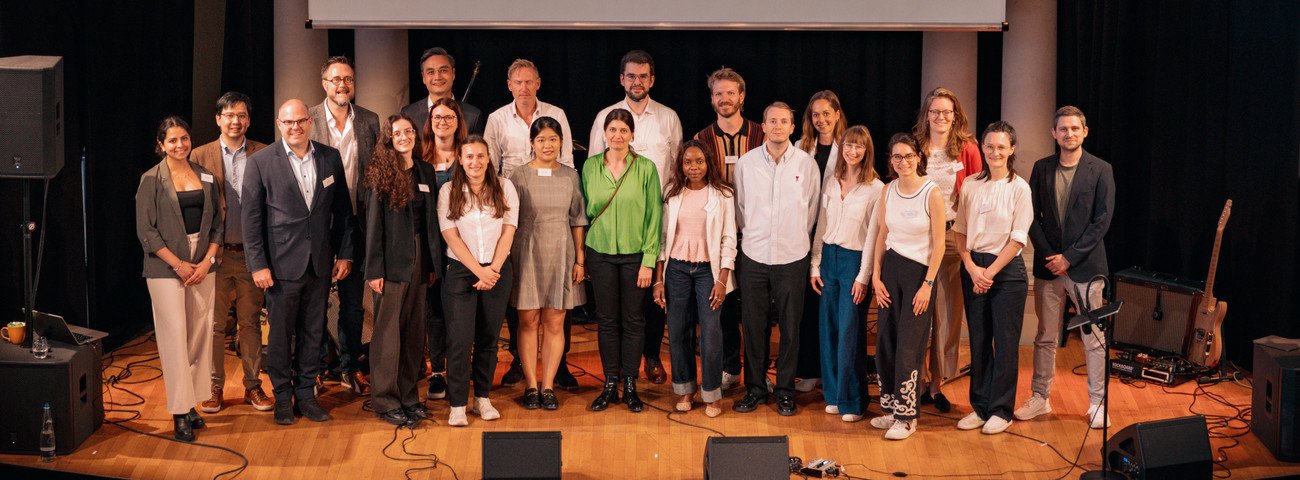
“A tremendous success”: The Research Training Group 2720 “Digital Platform Ecosystems (DPE),” funded by the German Research Foundation (DFG), is one of four research training groups across Germany whose extension was announced in November.
A handful of platforms dominates the digital world - with far-reaching consequences for competition, innovation, and society. The University of Passau will continue to investigate this tension for another four and a half years from a uniquely interdisciplinary perspective: The German Research Foundation (DFG) has approved the second funding period of DFG Research Training Group 2720 “Digital Platform Ecosystems (DPE)” from 2027 to 2031. It is thus one of four Research Training Groups nationwide whose extension was announced in November.
“This is a tremendous success - and a very important one for the University,” says President Professor Jan Schumann. “In a remarkably short time, the Research Training Group has become the world’s largest interdisciplinary training and research program in business and economics devoted to the platform economy. It thus shapes our University’s established research area ‘Digital Platforms.’”
Between Market Power and Disinformation
In its second funding period, the RTG turns its attention more squarely to the darker sides of the platform economy: the growing market dominance of a few platforms, the hard-to-regulate spread of artificial intelligence through platforms, platform-based disinformation, and unfulfilled development promises in the Global South. Three research perspectives bundle the research projects. The first examines how decentrally organized platform ecosystems - such as federated platforms or open AI ecosystems - enable or constrain participation, competition, and innovation. The second analyzes how strategic actors gain interpretive authority and legitimacy on platforms - including through polarization and disinformation. The third perspective illuminates the opportunities and risks of platform-based value creation in low- and middle-income countries - the so-called Global South - particularly as it relates to agriculture, finance, health, and the gig economy.
Read more in the Article in our Digital Research Magazine